
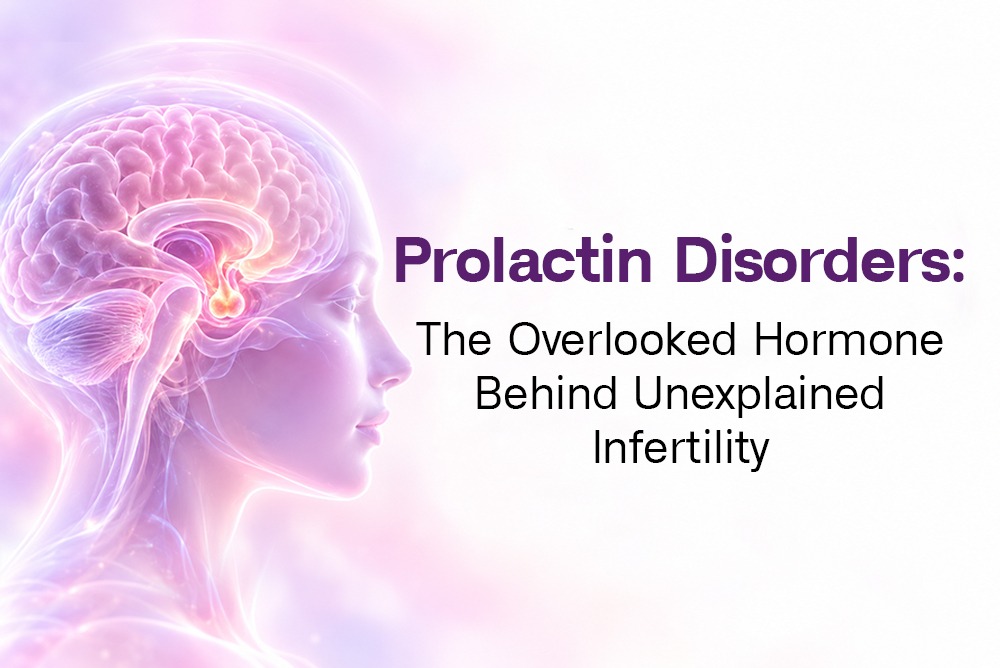
For many couples, pregnancy does not happen even when all their reports are normal. The reason could be high prolactin levels. It is common for most routine checkups to miss the prolactin evaluation. When prolactin is too high, it can stop ovulation in women and may reduce sperm production in men. But the good news is that the prolactin disorder can be found with simple blood test and is treatable in most cases.
What is Prolactin?
Prolactin is a hormone produced by the small gland called the pituitary gland present at the base of the brain. It plays a crucial role in the production of breast milk in women after delivery; prolactin levels rise naturally during pregnancy and breastfeeding.
Prolactin levels must stay low in men and women who are not pregnant or breastfeeding. If it’s higher than the normal range, then this condition is called hyperprolactinemia, the most common prolactin disorder.
What Are Prolactin Disorders?
Prolactin disorders occur when the body produces too much or too little of the prolactin hormone. When it comes to fertility care, high levels of prolactin are important to note because they can interfere with normal reproductive hormone function.
However, it naturally increases during pregnancy or breastfeeding. It may also temporarily increase during sleep, stress, or due to any physiological conditions.
What causes high prolactin levels?
High prolactin levels can happen for different reasons. Identifying the cause is essential because treatment depends on the underlying condition. Some common causes are:
- Prolactinoma:
It is usually a non-cancerous growth in the pituitary gland that makes extra prolactin. Most of these growths are small, and it is an important cause of persistent hyperprolactinemia. - Underactive thyroid (hypothyroidism):
Low thyroid hormone can increase prolactin levels. Thyroid hormones influence several processes involved in normal reproductive function. So, when it is left untreated, it disturbs menstruation and fertility. - Certain medicines:
Some medicines used for depression, mental health conditions, nausea, acidity, and high blood pressure may increase prolactin. Therefore, it is advised never to stop any medicine on your own or change it. You can always review your medicines with your doctor for alternatives. - Medical conditions:
Long-term illness like kidney diseases may affect the pituitary gland and surrounding structures, resulting in increased prolactin levels. - Stress and Physiological changes:
Prolactin levels may rise temporarily, sometimes due to stress, sleep, exercise, or other physiological factors. However, a temporary increase does not indicate a persistent prolactin disorder.
How does high prolactin affect women and men?
Prolactin levels affect fertility in both men and women; however, the symptoms differ due to different reproductive systems and hormone patterns.
Prolactin disorder in women:
In women, the higher prolactin level interferes with hormones responsible for normal ovarian function, which can affect egg development, ovulation, and menstrual regularity. Some of the common effects include:
- Unpredictable menstrual cycles where periods may either be irregular or may stop.
- Ovaries may not release an egg regularly
- Unexpected milk discharge may happen even when a woman is not pregnant or breastfeeding.
- Oestrogen levels would reduce, resulting in the suppression of reproductive hormones, causing vaginal dryness and discomfort during intercourse.
- Irregular or absent ovulation can reduce the chances of pregnancy.
Prolactin disorder in men:
In men, high prolactin levels can interfere with the hormonal signals that are responsible for the production and development of testosterone and sperm, which may affect sexual function and the ability to conceive. Some of the common effects include:
- Low testosterone may affect reproductive and general health.
- It may lead to reduced libido or difficulty in maintaining or achieving an erection.
- Hormonal changes may reduce sperm production and affect fertility.
- Some men may develop enlarged breast tissue.
- Some men may have reduced body hair or muscle mass, which may happen because testosterone remains low for a prolonged period.
How does Prolactin Disorder affect fertility?
Prolactin plays a role in reproductive hormone regulation. When levels are high, it interferes with the hormones that support conception. The following are some ways prolactin disorder may affect fertility and pregnancy:
- Disrupted Ovulation:
High prolactin interferes with the release of gonadotropin-releasing hormone (GnRH), which helps regulate follicle-stimulating hormone (FSH) and luteinising hormone (LH) that support the development and release of an egg during the menstrual cycle. When the normal function is disrupted, ovulation may become irregular or stop, and without regular ovulation, predicting the fertile window becomes more difficult, thus reducing the chances of natural conception. - Irregular Menstrual Cycles:
It may cause irregular periods or may lead to stopping menstruation completely, while some women may experience longer menstrual cycles or may have very few periods. These kinds of changes indicate that ovulation is not functioning normally. - Reduced Fertility in Men:
It can suppress the hormones that stimulate testosterone production and sperm development, leading to low testosterone levels, reduced libido, erectile difficulties, and impaired fertility. - Challenges during pregnancy planning:
When prolactin disorder is left untreated, it makes conception difficult, especially when it interferes with ovulation. But it does not automatically indicate that a person cannot become pregnant. The outcome depends on the cause, severity, and other fertility conditions. However, treating it on time can restore reproductive function in many patients.
What are the signs and symptoms of Prolactin Disorders?
The signs and symptoms of high prolactin disorder vary from person to person, and it also depends on how the reproductive hormones are affected. Some people may have no noticeable symptoms and can be discovered during fertility assessments. Some of the common signs include:
- Irregular or missed periods
- Milky discharge from the nipples when not pregnant or breastfeeding
- Difficulty getting pregnant
- Headaches that do not go away
- Changes in vision, which can happen with larger pituitary growths
- Low libido, erection problems, tiredness or breast enlargement in men
- Vaginal dryness or discomfort during intercourse.
- Reduced testosterone levels or sperm production
If you have any of these signs, or if you have been trying to conceive without success, ask your doctor about a prolactin test.
How are prolactin disorders diagnosed and treated?
A prolactin blood test is the first step towards diagnosing and confirming prolactin levels. The best time for this test is in the morning, a few hours after waking up, and without heavy exercise or stress before the test.
In case of high levels, the test is usually repeated for confirmation because the rise in the levels could sometimes be due to stress or other physiological conditions. In addition, the doctor may also check thyroid levels (TSH), kidney function, a pregnancy test, an MRI of the pituitary gland if the level is very high or you have headaches or vision changes, and testosterone levels and a semen analysis in men.
Once the test reports confirm a prolactin disorder, your doctor may start treatment depending on the cause. Treatment may include medications, thyroid treatment, medicine review if it is raising the prolactin, and, in rare cases, surgery or radiation may be required when the condition does not respond to medicines.
Your doctor may advise fertility treatments like IUI or IVF when pregnancy does not happen even after prolactin is controlled.
How can Ekam Fertility help you with prolactin disorders?
Our specialists at Ekam Fertility and Women first confirm the result before starting any treatment because they understand that a mild rise can happen due to stress during the time of the test. Dr. Nischala Reddy, along with her team, first assesses the symptoms. Menstrual history, previous test results and other reproductive health concerns. And depending on the findings, further treatment is suggested. In some cases, fertility treatments are advised.
If you suspect of having high prolactin levels and are looking for the fertility clinic or gynaecologists, then Ekam Fertility and Women in Kokapet, Hyderabad would offer the personalised treatments. Whether you need an assessment for hormonal imbalance or a comprehensive infertility evaluation, the team can help you understand the next steps.
Book your fertility consultation at Ekam Fertility & Women today.