
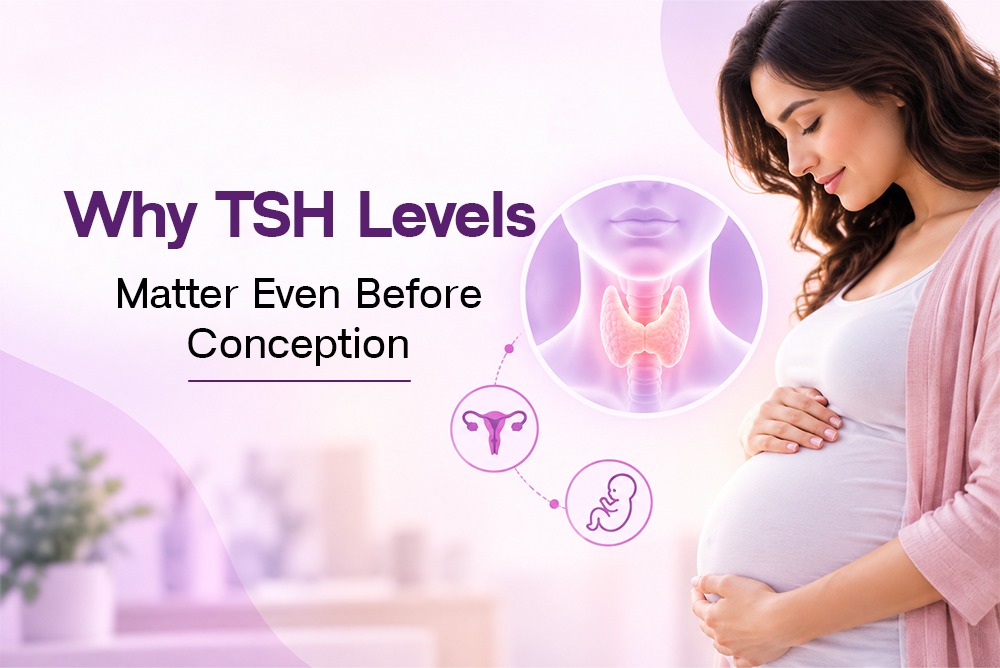
Most couples worry about thyroid testing only after they get pregnant, and even then, only when the doctor orders tests for them. But the fact is that thyroid affects your periods, ovulation, and even your chances of conceiving long before. For some people, a thyroid problem can also be present without any clear symptoms.
A thyroid check is a simple blood test that measures thyroid-stimulating hormone (TSH). Abnormal TSH levels may indicate an underactive or overactive thyroid, affecting fertility. This blog explains how the thyroid affects fertility, what your TSH level means, and what you should do before you start trying for a baby.
How is Thyroid and Fertility Connected?
The thyroid is a small gland in the neck that produces the hormones that control your energy, weight, heartbeat, and body temperature. Along with this, thyroid hormones play a crucial role in the regulation of periods and ovulation.
Hypothyroidism is a condition in which the thyroid makes very little of the hormones, and in hyperthyroidism, the thyroid makes too much of the hormones. Both conditions disturb the menstrual cycle and make it harder to conceive. Thyroid glands are present in both men and women, but it is most common among women, as 1 in 8 women develops a thyroid problem in her lifetime.
What Is TSH?
TSH stands for thyroid-stimulating hormone, made by the brain to tell the thyroid how much hormone to produce.
High TSH usually means the thyroid is underactive and is not making enough hormone, while low TSH indicates an overactive thyroid that’s producing too much of the thyroid hormone.
While planning for pregnancy, fertility doctors usually prefer the ideal TSH level to be below 2.5 mlU/L. In some cases, when the TSH level goes up, it creates the risk of miscarriage. But the ideal range depends on the overall condition of the patient, as decided by fertility specialists.
How Do Thyroid Problems Affect Periods, Ovulation and Fertility?
Thyroid hormones act on the ovaries and the lining of the uterus. When thyroid levels are not balanced, it is common to notice:
- Irregular, heavy, light, or missed periods
- Ovulation that happens late or does not happen
- Higher levels of prolactin, which can also stop ovulation
- Lower chances of conceiving each month
Note: Some women have regular periods and still can have a thyroid problem. That is why a blood test is the only way to confirm.
Thyroid problems affect men too, but it is rare. In men, an underactive or overactive thyroid may affect sperm count, sperm movement, sperm shape, and libido. And that’s the reason why it is important to check both partners.
How Do Thyroid Problems Affect Early Pregnancy?
In the first three months of pregnancy, the baby depends fully on thyroid hormone for brain and nerve development. When thyroid levels are low during conception, the baby’s needs inside the uterus may not be fully met. And if it is left untreated, it increases the risk of:
- Early pregnancy loss
- Preterm birth
- High blood pressure in pregnancy
- Low birth weight
- Problems with the baby’s development, in severe and untreated cases
With proper treatment and regular checks, most women with a thyroid problem have a healthy pregnancy.
Signs of Thyroid problems that may affect Fertility
Thyroid problems do not always cause obvious symptoms. There are no obvious symptoms shown by thyroid problems. However, symptoms greatly depend on whether it is underactive or overactive.
Symptoms of hypothyroidism:
- Feeling tired all the time
- Weight gain without a clear reason
- Hair fall and dry skin
- Increased sensitivity to cold.
- Difficulty conceiving.
- Constipation
- Heavy or irregular periods
Symptoms of hyperthyroidism:
- Weight loss even when you eat normally
- Fast heartbeat
- Anxiety or restlessness
- Too much sweating
- Light or missed periods
- Trouble sleeping
Note: Some women may not show any of these signs, yet they may have thyroid problems. Also, these symptoms may appear for other diseases too. Therefore, a blood test is essential to determine thyroid function. If you are experiencing any of the symptoms persistently, then speak with your doctor.
What Causes Thyroid Imbalance?
There are several factors that can affect thyroid function and may lead to abnormal TSH levels. Some of the causes are:
- Autoimmune Thyroid conditions:
Hashimoto’s and Graves’ are both autoimmune thyroid diseases in which the body’s immune system mistakenly attacks the thyroid gland, causing an underactive or overactive thyroid. Both these conditions require proper treatment before you plan for pregnancy. - Iodine imbalance:
The body needs iodine to produce thyroid hormones. Too little iodine can contribute to thyroid problems, while excessive iodine intake can also affect thyroid function. Iodine is an essential element for the body to produce thyroid hormones. But the amount of iodine plays a crucial role because too much and too little iodine contribute to thyroid problems and disrupt functioning. - Thyroid Nodules:
Some thyroid nodules can produce excess thyroid hormone. Depending on the symptoms and test results, your doctor may recommend further investigations. - Medications and medical conditions:
Sometimes the thyroid function and the test results get influenced due to existing medical conditions or medicines. So it becomes important to tell your doctor about your medical condition or any medicines you are taking so that your tests are interpreted correctly.
Who Should Get Their Thyroid Tested Before Pregnancy?
Although thyroid testing is essential and must be included in a routine checkup, if you are planning for pregnancy and have any of the following signs, then it becomes important to have a thyroid test.
- Have been trying to conceive for 12 months (or 6 months if you are over 35) without success
- Have irregular periods
- Have had one or more miscarriages
- Have a family history of thyroid disease
- Have any signs of thyroid problems
- Have another autoimmune condition, such as type 1 diabetes
- Are planning IUI or IVF
How Are Thyroid Problems Treated When Planning Pregnancy?
- Underactive thyroid:
You will usually take a daily tablet called levothyroxine. Fertility treatment is usually started after your thyroid levels are back to normal. - Overactive thyroid:
The cause is treated first, and you may need medicines to bring the hormone level down. Pregnancy is usually planned after the levels are stable. - Regular checks:
Your TSH is checked every few weeks at first, and then every few months. - During pregnancy:
Many women need a higher dose of levothyroxine once they are pregnant, so your levels are checked early.
How long does it take for the Tsh levels to come down after starting tablets?
It takes 4 to 6 weeks for the tablets to optimise the TSH levels . Therefore it’s very important to get the tests done while you are planning for pregnancy or during the first consultation in your early pregnancy .
Why Do Doctors Check TSH Before IUI and IVF?
Thyroid problems impact ovulation, uterine lining, egg development, and how well your body responds to treatment. If your thyroid is not under control, your doctor may ask you to correct it first. This helps to avoid wasting a treatment cycle and gives the pregnancy a better start.
How Can Ekam Fertility Help You With Thyroid and Fertility Problems?
At Ekam Fertility and Women, our expert specialists do not just look at your TSH levels; they check your thyroid along with your ovulation, hormone levels, ovarian reserve, and your partner’s reports. We plan the next steps in your fertility journey only when your thyroid levels are under control.
If you are looking for the fertility centre in Hyderabad, then Ekam Fertility & Women in Kokapet is here to help you. Under the guidance of our fertility specialist, Dr. Nischala Reddy and her team will be there with you from consultations and screening tests through to the treatments. Dr. Nischala Reddy is one of the best gynaecologists in Kokapet, Hyderabad, offering personalised treatment plans.